



Radiators or Baseboards Cold at the Top or Not Heating? 7 Causes and Fixes
A hot water radiator or baseboard that stays cold at the top, or never warms at all, usually points to one of seven causes: trapped air, low system pressure, a stuck zone valve or thermostat problem, a weak circulator pump, sludge in the piping, a closed or stuck valve at the unit, or a boiler that is not making heat. Air and a closed valve are the two a homeowner can check safely. Waldman Plumbing and Heating, a fourth-generation family company in Lynn since 1920, is BBB accredited and carries verified reviews on Google, Yelp, and HomeAdvisor. Our heating team works under MA Master Plumber License #12964 and MA Sheet Metal Worker License #830, carries General Liability and Workers Compensation insurance, and answers emergency calls 24/7.
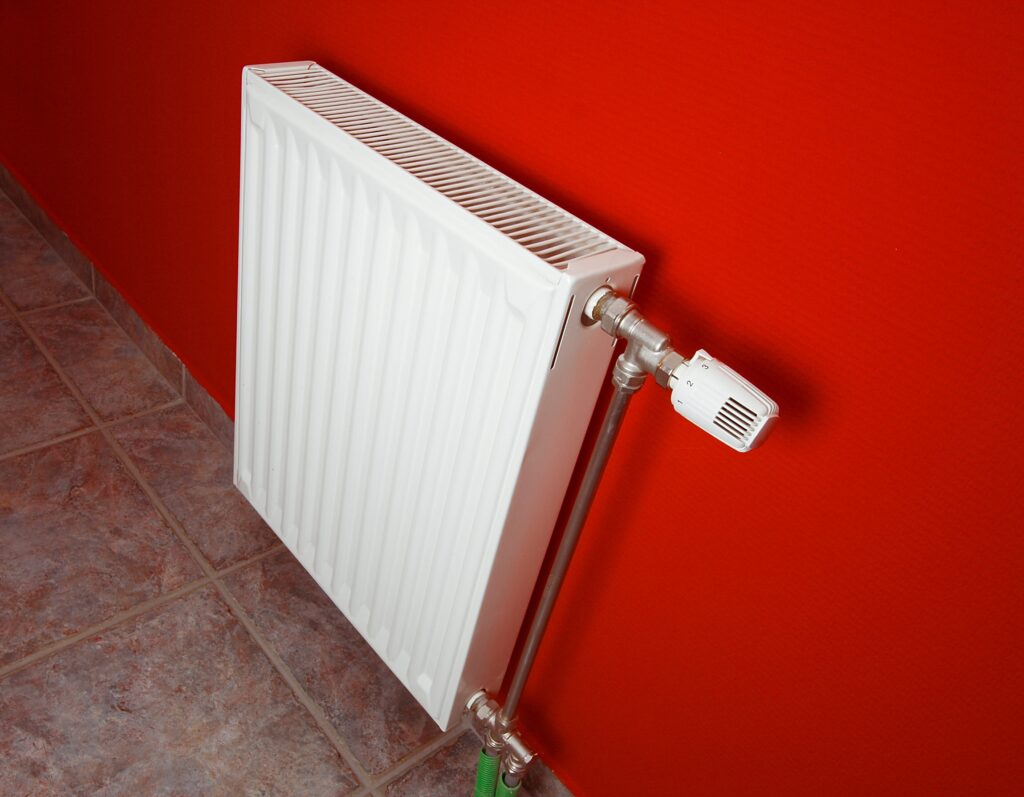
This guide covers hot water (hydronic) radiators and baseboards. Steam radiators have a small vent on the side and no bleed screw, and they fail in different ways, so call our boiler and furnace team rather than opening anything on a steam radiator. Electric baseboard heaters have no water loop at all. If yours run from a breaker and a wall thermostat instead of piping, start with the breaker and the thermostat.
What a Cold Radiator Tells You About a Hot Water Heating System
A hot water heating system works as a loop. The boiler heats water, a circulator pump pushes it through the piping, and radiators, baseboards, or convectors release that heat into each room. Thermostats start the cycle, and in a multi-zone home a zone valve or a separate circulator controls each floor or section. An expansion tank and an air vent keep pressure steady and air out of the loop, and a fill valve tops the system up to its set pressure.
When any link in that loop weakens, the highest and farthest radiators lose heat first. That is why a radiator can feel warm at the bottom and cold at the top, why the second floor goes cold before the first, and why one zone can fail while the rest of the house stays comfortable. Read the pattern before you touch anything:
| What You Notice | Most Likely Cause | Safe First Check |
| Cold at the top, warm at the bottom | Trapped air | Bleed the radiator with the system off and cool |
| Cold at the bottom, warm at the top | Sludge or debris at the base, often in older cast iron | Note the pattern and call a technician; do not take the radiator apart |
| One radiator cold, the rest warm | A closed or stuck valve at that unit, or air in that unit | Confirm the valve is fully open; bleed it if it has a screw |
| Every radiator on one floor or zone cold | Zone valve, thermostat call, or circulator | Confirm the thermostat is set to Heat; note whether the pipe leaving the boiler is hot |
| Every radiator cold, boiler silent or locked out | The boiler is not making heat | Check the power switch, fuel supply, and pressure gauge; call for service |
7 Causes of Radiators and Baseboards That Stay Cold
1. Trapped Air in the Radiator or Piping
Air is the most common reason for a radiator that is cold at the top. Air rises, collects at the highest point, and blocks hot water from filling the unit. New air enters a system after a repair, after a boiler refill, through a small leak, or through an air vent that was installed wrong. The reference site InspectAPedia explains that air in the pipes, baseboards, and radiators makes a gurgling noise and ultimately leads to loss of heat, and that the circulator lacks the force to push a large pocket of trapped air around the piping. Air that returns days after you bleed a radiator signals a deeper problem, such as a leak, a failing air vent, or a waterlogged expansion tank.
2. Low System Pressure
Hot water has to reach the highest radiator in the house, and system pressure is what lifts it there. A fill valve holds the pressure at a set point. When that valve fails, when a small leak lets water escape, or when the expansion tank loses its air cushion, the gauge drops or swings and the upper floors go cold first.
The trade resource HeatingHelp notes that the highest pressure a boiler should ever see is stamped on its tag, usually 30 or 50 psi, and that a system needs only enough pressure to lift water a few feet above its highest point. One contributor there points out that a 12 psi setting lifts water about 28 feet above the fill valve, which is more height than a typical two-story home needs. Your boiler manual and tag set the right numbers for your system. A gauge that has dropped near zero, or one that climbs toward the maximum on the tag, needs a technician.
3. A Stuck Zone Valve or Thermostat Problem
Many homes split the heat into zones, each with its own thermostat and a zone valve or circulator. A zone valve that sticks closed, or whose motor fails, keeps hot water from reaching that floor even though the boiler runs normally. A thermostat with dead batteries, a loose wire, or the wrong mode produces the same result. The pattern gives it away: every radiator or baseboard on one thermostat stays cold while the rest of the house is warm. Small control errors also waste fuel, which our article on how ignoring small thermostat errors creates big heating inefficiencies explains.
4. A Weak or Failed Circulator Pump
The circulator moves hot water through the loop. A failing circulator may hum, grind, or run silently without moving any water. The pipe leaving the boiler stays hot, but the radiators farther along never warm up. A circulator replacement means isolating part of the system and working on the wiring, so it belongs to a licensed professional.
5. Sludge, Scale, or Debris in the System
Older systems with iron boilers and cast iron radiators collect a dark sludge of iron oxide and debris that settles in the lowest parts of radiators and piping. Sludge restricts flow and creates cold patches, often at the bottom of a radiator, and it can leave a whole radiator cooler than its neighbors. A bleed screw does not help here. A technician cleans or flushes the system and often adds a dirt separator or magnetic filter on the return line.
6. A Closed or Stuck Valve, or a Blocked Baseboard
Someone may have closed a radiator valve over the summer, or the valve stem may have seized part way. Baseboard units have a damper inside the cover and aluminum fins that clog with dust, pet hair, or paint, and furniture or curtains can block the airflow around them. Open the valve fully, open the damper, vacuum the fins gently with the system off and cool, and move anything that blocks the unit. Do not force a valve that will not turn, because the stem can start to leak. A plumber can replace it.
7. The Boiler Itself Is Not Making Heat
When every radiator is cold, look at the boiler. A tripped switch, an empty oil tank, a flame failure, a failed control, a low water-temperature setting, or a lockout leaves the whole house cold. One reset can restore heat, but repeated lockouts mean something is wrong, such as a dirty burner, a weak ignition, or a failing control. Our guide to repeated burner lockouts in oil systems explains what those lockouts mean for oil-fired boilers.
Warning Signs That Point to Each Problem
- Water that gurgles, bubbles, or rushes: air in the loop or low pressure.
- A pressure gauge near zero, or a relief valve that drips: a fill valve, expansion tank, or leak problem.
- One floor cold while the boiler runs: a zone valve, thermostat, or circulator fault.
- A hot pipe at the boiler and lukewarm pipes beyond the first radiators: weak circulation or sludge.
- Frequent starts and stops, or rumbling from the boiler: scale and flow problems. Our article on kettling noises and what they mean for your boiler covers the sound.
- Dark or rust-colored water when you bleed a radiator: sludge or corrosion inside the system.
- Water on the floor near the boiler or at a radiator valve: a leak that needs a technician.
- A fuel smell, soot, or a carbon monoxide alarm: these call for immediate attention from a licensed professional. If an alarm sounds, go outdoors and call the fire department, then schedule our carbon monoxide testing once the system has been checked.
Mass.gov’s winter home heating safety guidance advises homeowners to have furnaces and chimneys checked annually by a professional, to install carbon monoxide alarms on every level of the home, and to keep appliance vents and exhaust pipes clear of drifting snow and bushes. Those points apply to boilers too, since a boiler burns the same fuels and vents the same combustion gases.
DIY Checks vs. Calling a Licensed Professional
Seven Safe Checks Before You Call
- Set the thermostat to Heat, a few degrees above room temperature, and replace its batteries if it uses them.
- Confirm the boiler’s power switch is on and the unit is not in lockout. On an oil system, glance at the tank gauge.
- Read the pressure gauge with the system cold and compare it with the numbers in your boiler manual or on the boiler tag. A need to add water more than once points to a leak or a failed part, and cold water should never go into a hot boiler.
- Make sure the valve at each cold radiator is fully open, the baseboard damper is open, and the fins are clear.
- Bleed a cold radiator that has a bleed screw. Turn the thermostat down and let the system cool, hold a towel under the screw, and open it slowly with a radiator key until air hisses out. Close it as soon as water comes out. InspectAPedia notes there is no benefit to bleeding heating water once the air has been released.
- Recheck the pressure gauge. If bleeding pushed pressure below the normal range in your manual, stop and call us.
- Write down the pattern (one radiator, one floor, or the whole house) and any noises. That detail shortens the visit.
Leave These to a Licensed Professional
- Zone valves, circulators, fill valves, expansion tanks, and air eliminators.
- Burner, ignition, controls, and gas or oil piping. Massachusetts regulates gas fitting work under 248 CMR, the state fuel gas code, and licensed professionals handle it.
- The relief valve. Never cap, plug, or adjust it.
- System flushes and sludge removal.
- Any radiator valve that will not turn, leaks, or drips.
Solutions: How a Technician Fixes Each Cause
| Cause | Professional Fix | What Prevents a Repeat |
| Trapped air | Purge the zone, test and replace failed air vents, check the fill valve and expansion tank | A pressure and air check every fall |
| Low pressure | Test the fill valve, expansion tank, and piping for leaks, then replace the failed part | Early repair of small leaks |
| Zone valve or thermostat | Test the call for heat, replace the valve or motor, correct the wiring or thermostat | Fresh batteries and a zone test before the season |
| Circulator pump | Test the pump and install a correctly sized replacement | Annual service and attention to new noises |
| Sludge or debris | Flush the system and add a dirt separator or magnetic filter | Filter service at each tune-up |
| Closed or blocked unit | Free or replace the valve, clean the fins, restore the covers and dampers | Open every valve each fall and keep fins clear |
| Boiler not making heat | Diagnose ignition, controls, and combustion, then repair or replace parts | An annual heating maintenance visit with combustion testing |
Repair or Replace the Boiler?
A boiler that locks out repeatedly, leaks, or fails to heat the house even after the piping checks out may be near the end of its service life. Each path has trade-offs:
| Option | Pros | Cons |
| Repair | Smaller first step; fixes the failed part; keeps the existing system and its layout | Repeat visits are likely when the boiler is aging; each repair addresses one part at a time |
| Replace | Restores reliability; lets us right-size the equipment, update controls, and add zoning; new equipment carries a manufacturer warranty | Larger project that needs planning around your heating season and your home |
ENERGY STAR certifies gas boilers at 90 percent AFUE or higher and oil boilers at 87 percent or higher. For oil systems where gas service reaches the street, our oil to gas conversion service is another path. Waldman is a Viessmann ViPRO contractor, with active licensing, ongoing product training, and a proven track record with Viessmann systems, which opens exclusive 10-year warranties on select models. Our roundup of common boiler repairs to beat the winter chill shows the repairs we handle most before a cold snap.
Cold Radiators in Lynn, Newton, and Greater Boston Homes
Older housing explains why radiator problems come up so often here. U.S. Census Bureau American Community Survey estimates put the median home in Lynn at 1946 construction, with about 46 percent of its homes built before 1940. In Newton, the median home dates to 1942, and about 49 percent predate 1940. Homes of that age often keep long runs of original piping and cast iron radiators, which give sludge more places to settle.
Fuel type shapes the repair too. Mass.gov’s summary of Census data shows that about 52 percent of Massachusetts households heat with gas, about 20 percent with oil or kerosene, 20.5 percent with electricity, and 4.4 percent with propane. Oil systems add tank, filter, nozzle, and lockout checks, and gas systems add ignition and venting checks, while the hydronic loop behaves the same way in both.
The season matters as well. NOAA’s winter outlook, released on October 15, 2026, favors warmer-than-average temperatures for much of the East and wetter-than-average conditions along the East Coast. A milder winter still brings cold snaps, and the first cold week is when zone valves and circulators that sat idle all summer show their faults. We service hydronic systems in Lynn, Newton, and across Boston through our Boston boiler and furnace service.
Frequently Asked Questions About Cold Radiators and Baseboards
Why is my radiator cold at the top but warm at the bottom?
Trapped air is the usual cause. Air rises to the top of a hot water radiator and blocks the hot water. Bleed the radiator with the system off and cool to release the air. If the air returns within days, a leak, a failing air vent, or a waterlogged expansion tank may be letting more air in, and a technician should check the system.
Why is my radiator cold at the bottom but warm at the top?
That pattern often points to sludge or debris settling at the base of the radiator, which is common in older cast iron units. A bleed screw will not fix it. A technician can confirm the cause and clean or flush the system, and may add a dirt separator or magnetic filter.
How do I bleed a hot water radiator safely?
Turn the thermostat down and let the system cool. Hold a towel or small container under the bleed screw and open it slowly with a radiator key or screwdriver until air hisses out. Close the screw as soon as water comes out, because there is no benefit to bleeding heating water once the air is gone. Then check the boiler pressure gauge against the numbers in your manual. If bleeding pushed the pressure below the normal range, stop and call a licensed technician.
Do steam radiators need to be bled?
No. Steam radiators have an air vent on the side and no bleed screw. Do not open fittings on a hot steam radiator, because live steam can scald. A vent that hisses constantly, spits water, or never closes needs replacement by a technician.
Why is only one radiator not heating while the others work?
The usual causes are a closed or stuck valve at that radiator, air trapped in that unit, or sludge inside it. Confirm the valve is fully open, then bleed the radiator if it has a screw. If it stays cold, a plumber can check the valve and the piping to that unit.
Why is a whole floor or zone cold?
A whole zone points to the control side of the system: a thermostat that is not calling for heat, a zone valve stuck closed, or a circulator that failed. Check that the thermostat is set to Heat and has working batteries. If the setting is correct, call for a technician to test the zone valve and circulator.
What should my boiler pressure gauge read?
The right reading depends on your boiler and the height of your home, so follow the numbers in your manual. The boiler tag shows the highest pressure the boiler should ever see, usually 30 or 50 psi. A system needs only enough pressure to lift water a few feet above its highest point. A gauge near zero, or one that climbs toward the maximum on the tag, needs a technician.
Why does my boiler keep losing pressure?
A small leak, a failing fill valve, or an expansion tank that lost its air charge can all drop pressure. Each refill hides the leak and wears out the system. If you need to refill more than once, call a licensed technician to find the source.
Can I add water to my boiler myself?
Some manuals allow a homeowner to add water slowly through the fill valve when the system is cold. Never add cold water to a hot boiler. A need to do it more than once is a sign of a leak or a failed part, so call a licensed technician instead of topping it up repeatedly.
Why are my baseboards not heating when the boiler is running?
Check that the baseboard damper is open and the fins are clean and unblocked. If those are fine, the cause may be trapped air, a closed zone valve, a failed circulator, or sludge. A pattern across several baseboards on one zone points to the control side. A technician can trace the loop.
Why do my radiators gurgle or make water-rushing sounds?
Gurgling usually means air in the loop or low pressure. Bleed the affected radiators first, since that often clears it. If the noise returns, a technician should check the air vents, the fill valve, and the expansion tank.
How often should a hot water boiler be serviced?
We recommend a service visit once a year, ideally before the heating season. Mass.gov’s winter heating safety guidance advises having furnaces and chimneys checked annually by a professional, and boilers burn the same fuels. An annual visit catches weak circulators, failing valves, and combustion problems before the first cold week. Waldman’s Ultimate Savings Club includes an annual inspection with digital carbon monoxide analysis.
Can a thermostat cause radiators not to heat?
Yes. Dead batteries, a loose wire, the wrong mode, or a failed thermostat can keep a zone from calling for heat. Check the settings and batteries first. If the thermostat looks fine and the zone stays cold, a technician can test the call for heat at the zone valve or circulator.
When does a cold radiator problem mean the boiler needs replacing?
Repeated lockouts, leaks at the boiler, rising repair visits, and a system that no longer heats the home even when the piping is sound are the main signs. ENERGY STAR certifies gas boilers at 90 percent AFUE or higher and oil boilers at 87 percent or higher. A technician can evaluate your boiler’s condition and explain whether repair or replacement makes more sense.
What does Waldman do on a no-heat or cold radiator call?
A licensed technician checks the thermostat and zone call, the boiler’s operation and combustion, system pressure, the circulators, and the zone valves, then purges air and tests the affected radiators. Our trucks are stocked with replacement parts so we can complete most repairs during our first visit. Call 781.780.3184 any time, day or night, for 24/7 emergency service.
When to Call Waldman Plumbing and Heating
Waldman Plumbing and Heating has serviced boilers and hydronic systems across Lynn, the North Shore, and Greater Boston for over 100 years. Our licensed technicians diagnose the whole loop, not just the cold radiator: thermostat and zone call, zone valves, circulators, pressure, air, and boiler combustion. We service Rinnai, Navien, Viessmann, Rheem, and Bradford White equipment. Call us when a zone stays cold, air keeps returning, pressure will not hold, the boiler locks out, or you smell fuel.
| What We Offer | What It Means for You |
| Licensed Master Plumbers and Sheet Metal Worker | MA Master Plumber License #12964, verified through the Massachusetts Board of State Examiners of Plumbers and Gas Fitters, and MA Sheet Metal Worker License #830. |
| Fully Insured: General Liability and Workers Compensation | Zero liability comes back to you during radiator and boiler repair in your North Shore property. |
| BBB Accredited, A+ Rating | Third-party verified trust record across 100+ years. View our BBB accreditation profile. |
| Verified Customer Reviews | See what North Shore and North Shore neighbors say on Google, Yelp, and HomeAdvisor, or read verified customer testimonials. |
| Viessmann ViPRO Contractor | Active licensing, ongoing product training, and a proven track record with Viessmann systems, with exclusive 10-year warranties available on select Viessmann models. |
| Leading Brands: Rinnai, Navien, Viessmann, Rheem, Bradford White | We install the professional-grade equipment brands that deliver the best long-term value for local homeowners. |
| Over 100 Years, Four Generations | Family-owned since 1920 and now in its fourth generation. Read our company story to see who will be working in your North Shore property. |
| 24/7 Emergency Service | Urgent problems do not wait for business hours. We respond any time, any day. |
| 1 to 5 Year Warranties on Labor and Parts | Written warranties back the work we perform and the materials we install. |
| Annual Inspection via Ultimate Savings Club | The Ultimate Savings Club membership adds an annual system inspection with digital carbon monoxide analysis, member repair savings, and front-of-line scheduling. |
| Financing Available via GreenSky | Qualified customers can spread larger projects over time. Apply for heating and plumbing financing. |
| PHCC Member | Active membership in the Plumbing-Heating-Cooling Contractors Association keeps our team current on industry standards. |
Read verified customer reviews and check our credentials: Google Reviews | Yelp Reviews | HomeAdvisor Profile | BBB Accreditation Profile | Facebook Reviews
Get Your Radiators Heating Again
Call Waldman Plumbing and Heating at 781.780.3184 for same-day and 24/7 emergency boiler and radiator service. Our licensed, insured, BBB-accredited heating team holds MA Master Plumber License #12964 and MA Sheet Metal Worker License #830, and we back our work with 1 to 5 year warranties on labor and parts.