



Why Your Water Softener Has Stopped Producing Soft Water and What Causes It
If your water softener is still sitting in the basement, the salt level looks normal, the unit makes its regeneration sounds on schedule, but you are noticing scale returning on faucets, soap that will not lather, and laundry that feels stiff, your water softener has stopped doing its job. The unit may appear to be functioning while producing no soft water at all, and the reason is almost never obvious to someone standing in the utility room looking at it. Waldman Plumbing and Heating has diagnosed and repaired water softeners throughout Lynn, MA and the North Shore for over 100 years, and the failure modes are well understood. Our licensed Master and Journeyman Plumbers are BBB accredited, fully insured, and carry verified reviews on Google, Yelp, and HomeAdvisor. This guide walks through every reason a water softener stops producing soft water, how to diagnose each cause, and when a licensed plumber is the right call. For water softener repair and service throughout the North Shore, call 781.780.3184 for same-day diagnosis and repair.
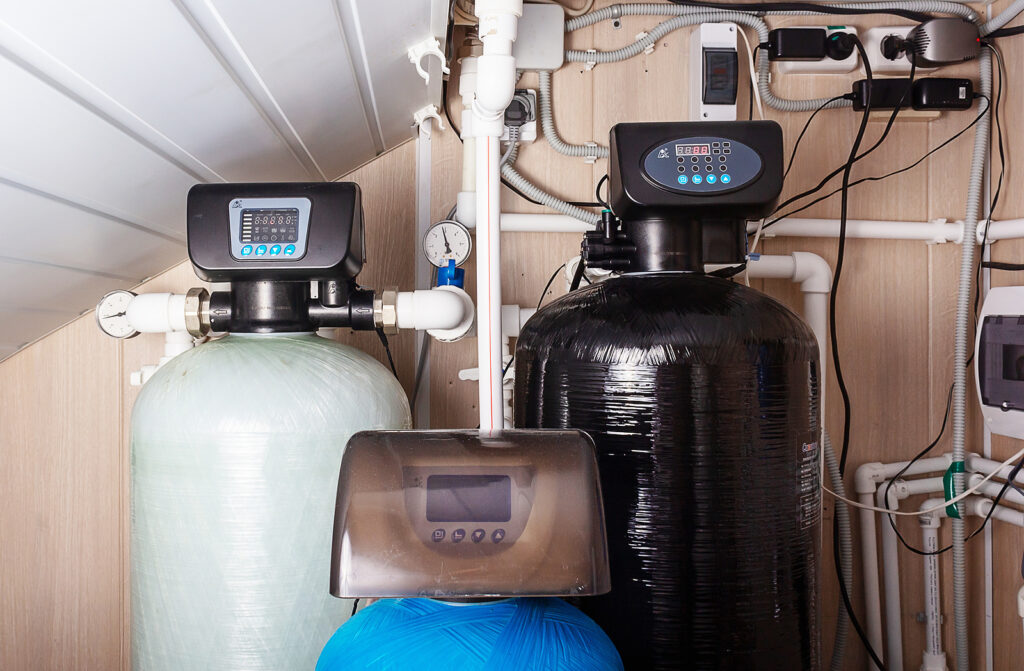
How to Confirm Your Water Softener Has Actually Stopped Working
Before diagnosing the cause, confirm the unit is actually underperforming rather than performing correctly but facing harder source water than usual. The most reliable home confirmation test is a water hardness test strip, available at hardware stores, used on water at a tap served by the softener. The Water Quality Association defines soft water as below 1 grain per gallon and moderately soft as 1 to 3.5 GPG. The Massachusetts Water Resources Authority (MWRA) supplies North Shore communities with water at a source hardness of approximately 4 to 8 grains per gallon from the Quabbin and Wachusett Reservoirs. A softener in proper working order should produce water below 1 GPG at the post-softener tap. If your test shows 4 GPG or more at a tap that should be on softened water, the softener is not performing.
What Causes a Water Softener to Stop Producing Soft Water
Salt Bridge Formation
A salt bridge is the most commonly encountered cause of sudden water softener failure, and it is the one most often missed at a casual glance. A salt bridge is a hard crust that forms across the top of the brine tank, several inches above the water level at the bottom of the tank. The crust spans the full diameter of the tank and appears to be a solid block of salt. When a homeowner opens the brine tank and sees what appears to be a full tank of salt, they assume the system is fine. The problem is that the crust is a shell with an air gap beneath it. The water cannot contact the salt above the bridge, so no brine is produced, and the resin bed cannot regenerate. The unit cycles normally, makes its sounds, uses water, but the resin beads are not being recharged with sodium, and unsoftened water passes through.
Salt bridges are caused by high humidity around the softener, low water usage that allows salt to sit undisturbed for extended periods, or the use of certain salt types that clump more easily than others. Breaking up a salt bridge is straightforward but requires caution: use a long-handled broom or rod to break the crust from the top without damaging the components below, and verify that loose salt chunks do not block the brine pickup line at the bottom of the tank.
Salt Mush in the Brine Tank
Salt mush is a related but distinct problem. Rather than forming a hard bridge, the salt in the brine tank dissolves partially and recrystallizes into a thick, wet sludge at the bottom of the tank. This mush can clog the brine pickup line, the brine well, and the injector assembly, preventing the system from drawing brine even if the control valve is functioning correctly. Salt mush is associated with certain salt types and with situations where unused, dissolved brine sits in the tank for extended periods. Resolving salt mush requires a full brine tank cleanout, which is a service Waldman Plumbing and Heating provides during water softener repair visits.
Resin Bead Fouling or Exhaustion
The resin bed inside the softener tank is the core of the system. Resin beads attract and hold calcium and magnesium ions, releasing sodium in exchange. Over time, several factors can degrade resin performance. Iron fouling occurs when the source water contains iron that bonds to the resin bead surface and cannot be flushed away by standard salt regeneration. This is less common in North Shore homes served by MWRA water, which has low iron content, but can affect properties with any remaining galvanized steel supply pipes that contribute iron at the tap. Chlorine degradation is another resin failure mode: high chlorine levels in municipal water break down resin beads over time, reducing their ion-exchange capacity. When resin is severely fouled or exhausted, the unit regenerates normally but the depleted resin cannot capture hardness minerals effectively regardless of salt supply. See our water filtration services for iron pre-filter options that protect resin beds in homes with elevated iron content.
Control Valve Failure
The control valve is the brain of the water softener. It manages the timing and sequence of the service cycle, the backwash, the brine draw, and the rinse phases of regeneration. A control valve failure can manifest as: a valve that initiates regeneration on schedule but does not advance through all phases correctly; a valve motor that has failed and prevents regeneration from initiating at all; a worn seal or O-ring inside the valve that allows water to bypass the resin bed even when the valve should be in the service position; or a failed timer or circuit board in electronic models that disrupts the regeneration schedule. A softener with a failed control valve may appear to be operational while the resin is producing increasingly hard water as each regeneration cycle fails.
Bypass Valve Left Open
This sounds obvious but is the second most commonly encountered cause of sudden soft water loss after a service visit: the bypass valve. Every water softener has a bypass valve that routes water around the softener for servicing. If a plumber, appliance installer, or homeowner opened the bypass for any reason and did not return it to the service position, hard water is simply flowing around the softener while the unit sits in normal operation. Check the bypass valve position before diagnosing any other cause. The bypass handle or knob should be in the service position (not bypassed) for the softener to treat the supply water.
Incorrect Salt Type or Low Salt Level
A brine tank that appears to have adequate salt but actually has the salt level below the water line cannot produce concentrated brine because the water is not saturating with sodium chloride. The minimum safe salt level in most brine tanks is approximately 4 to 6 inches above the water level. Additionally, using rock salt with high impurities can leave mineral residue in the brine tank that impedes brine production over time. Waldman recommends evaporated pellet salt for most North Shore residential applications, which produces the cleanest brine with the least brine tank residue. See our water softeners service for more on salt selection and maintenance intervals.
Injector or Brine Line Blockage
The injector is a small venturi device inside the control valve that creates suction to draw brine from the brine tank during regeneration. If the injector orifice becomes clogged with sediment, mineral scale, or resin particles, brine cannot be drawn even when the control valve is functioning correctly. Similarly, the brine line, which connects the brine tank to the control valve, can become clogged with salt deposits or kinked in a way that restricts flow. A unit with an injector or brine line blockage goes through all the motions of regeneration but draws little or no brine, leaving the resin bed uncharged.
Warning Signs Your Water Softener Is Failing
- White or yellowish scale deposits reappearing on faucets, showerheads, and around sink drains after months or years without visible buildup
- Soap that does not lather in the shower or at the sink, or a distinct drop in soap performance that developed gradually
- Laundry that feels stiff, rough, or dull after washing, where it previously came out soft
- Dishes or glassware coming out of the dishwasher with spots or a cloudy film despite no change in detergent or wash temperature
- A water hardness test at the post-softener tap showing hardness above 2 to 3 GPG
- Salt level in the brine tank that appears stable or barely declining over several weeks (possible salt bridge if consumption is unexpectedly low)
- Salt level that is decreasing rapidly without improved soft water results (possible brine line or injector issue)
When to DIY and When to Call a Licensed Plumber
DIY Steps Worth Trying First
- Verify the bypass valve: Confirm the bypass is in the service position.
- Check salt level and type: Confirm salt is at least 4 to 6 inches above the water line in the brine tank. If salt level is below this, add the correct salt type (evaporated pellet recommended).
- Test for a salt bridge: Open the brine tank and press down with a long handle or broom rod. If the apparent solid salt surface gives way to an air gap below, you have a salt bridge. Break it up carefully.
- Manual regeneration: After breaking up a salt bridge or adding salt, initiate a manual regeneration cycle per the manufacturer instructions and wait 24 hours before retesting water hardness.
When to Call Waldman Plumbing and Heating
Call a licensed plumber when: the DIY steps above produce no improvement; you suspect resin fouling or control valve failure; the unit is more than 12 to 15 years old and showing declining performance; or you want an accurate diagnosis rather than guessing through the failure modes sequentially. Waldman Plumbing and Heating diagnoses and repairs all major water softener brands throughout the North Shore, including Kinetico, Culligan, EcoWater, GE, Whirlpool, Kenmore, and Pentair. We carry commonly needed parts on service vehicles. For units past their reliable service life, our water softener replacement service provides sizing and installation matched to your household’s actual water hardness and daily usage. For related water quality services, see our water filtration service and our annual plumbing inspection which includes water softener condition assessment for Ultimate Savings Club members.
Why North Shore Homeowners Choose Waldman for Water Softener Repair
Waldman Plumbing and Heating diagnoses and repairs water softeners accurately in a single visit throughout the North Shore, because our licensed plumbers understand the full range of failure modes and bring the right diagnostic approach to each. We are BBB accredited, fully insured, and have served North Shore homeowners for over a century. Read what customers say on Google, Yelp, and HomeAdvisor.
| What We Offer | What It Means for You |
| Licensed Master and Journeyman Plumbers | Water softener repair performed by state-certified professionals verified by the Massachusetts Board of State Examiners of Plumbers and Gas Fitters. |
| Fully Insured: General Liability and Workers Compensation | Zero liability comes back to you during any water softener service visit. |
| BBB Accredited Business | Third-party verified trust record across 100+ years. View our BBB accreditation profile. |
| Over 100 Years Serving the North Shore | Four generations of local water softener expertise. Read verified customer testimonials. |
| All Major Brands Serviced | Kinetico, Culligan, EcoWater, GE, Whirlpool, Kenmore, Pentair, and more. |
| Flat-Rate, Upfront Pricing | We charge by the job. You know your repair cost before we start. |
| 24/7 Emergency Service | Water quality issues get same-day response throughout the North Shore. |
| Annual Inspection via Ultimate Savings Club See Club Details | For $79 per year, our club includes water softener condition assessment, 10 percent repair discount, and priority scheduling. Enroll today. |
Read verified customer reviews and check our credentials: Google Reviews | Yelp Reviews | HomeAdvisor Profile | BBB Accreditation Profile | Facebook Reviews
Frequently Asked Questions About Water Softeners That Have Stopped Working
Why does my water softener appear to work but still produce hard water?
Several failure modes allow a water softener to appear operational while producing no soft water: a salt bridge that creates an air gap between the water and the salt in the brine tank; a control valve that cycles but fails to complete the brine draw phase; a bypass valve left open after servicing; a fouled resin bed that has lost its ion-exchange capacity; or an injector blockage that prevents brine from being drawn during regeneration.
What is a salt bridge in a water softener?
A salt bridge is a hard crust of compacted salt that forms across the top of the brine tank, several inches above the water level. The crust creates an air gap between the standing water and the salt above it. Because the water cannot contact the salt, no brine is produced, the resin cannot be regenerated, and the unit produces unsoftened water. The brine tank may appear full when the problem is actually an empty, unbridged section below the crust.
How do I check for a salt bridge in my water softener?
Open the brine tank lid and press firmly downward with a long handle, broom handle, or rod. If what appears to be solid salt gives way and you discover an air space or cavity below a crust, you have a salt bridge. Break up the crust carefully without damaging the brine well or pickup assembly at the bottom of the tank. After breaking the bridge, allow the salt to dissolve, add salt if the tank is now low, and initiate a manual regeneration cycle before retesting water hardness.
What is the difference between a salt bridge and salt mush?
A salt bridge is a hard crust that spans the brine tank at a height above the water, creating an air gap. Salt mush is wet, sludgy salt residue that accumulates at the bottom of the brine tank and can clog the brine pickup tube, brine well, and injector. Both prevent brine production but require different remediation: a salt bridge is broken up from the top, while salt mush requires a full brine tank cleanout. Both can occur in the same tank over time.
What is resin fouling and how does it affect water softener performance?
Resin fouling occurs when substances in the water supply coat the surface of the resin beads and prevent them from attracting and holding hardness minerals. The most common fouling agents are iron, which bonds permanently to resin bead surfaces, and chlorine, which breaks down resin bead structure over time. Fouled resin beads lose their ion-exchange capacity and produce increasingly hard water even when the regeneration cycle completes normally.
How do I know if my water softener’s resin needs replacement?
Signs that resin may need replacement include persistent hard water despite normal regeneration cycles after all other failure modes have been ruled out, rust or brownish discoloration in the softener outlet water, and a unit that is more than 10 to 15 years old. A licensed plumber can assess resin condition and advise whether resin replacement or full unit replacement is the more cost-effective path.
What is the bypass valve and why would it cause hard water?
The bypass valve is a device on every water softener that routes water around the softener for servicing or maintenance without shutting off the home water supply. If the bypass valve was opened for any reason and not returned to the service position, hard water flows directly through to the home while the softener sits idle. Always check the bypass position before investigating any other cause of hard water.
How often should a water softener regenerate?
Most residential water softeners are set to regenerate every two to seven days depending on household water use and source water hardness. Systems with demand-initiated regeneration (DIR) controllers regenerate based on actual water usage rather than a fixed schedule, which reduces salt consumption. If a softener is regenerating on a fixed schedule but the intervals no longer match actual usage patterns, it may either under-regenerate (producing hard water between cycles) or over-regenerate (wasting salt).
Why is my water softener using more salt than usual?
Higher-than-normal salt consumption usually indicates the system is over-regenerating, possibly due to a programming change or a control valve failure that initiates unnecessary regeneration cycles. A stuck brine valve that allows continuous brine draw can also deplete salt rapidly. Confirm the regeneration frequency and volume settings match the manufacturer specifications for your household size and source water hardness.
Does low salt level in the brine tank always mean the softener is working?
No. A declining salt level confirms the system is using salt, but does not confirm it is producing soft water. The salt might be dissolving into water that is not being drawn effectively through the resin bed due to an injector blockage or control valve fault. Conversely, a salt level that appears stable over weeks may indicate a salt bridge preventing consumption rather than low usage.
Can I repair a water softener myself?
Homeowners can safely check and correct some common causes: verifying bypass position, checking and refilling salt, breaking up a salt bridge, and initiating a manual regeneration cycle. More involved repairs, including control valve work, injector cleaning, resin replacement, and electrical component troubleshooting, are best performed by a licensed plumber with the correct tools and manufacturer knowledge. Incorrectly disassembling a control valve can result in seal damage that makes the problem worse.
How long do water softeners typically last?
Most residential water softeners have a service life of 10 to 20 years with proper maintenance. The resin bed typically lasts 10 to 15 years before efficiency declines require replacement. Control valves can last the full unit life with proper maintenance or fail earlier if subjected to water quality issues that stress the seals and motor. Units maintained with annual professional assessment and the correct salt type reach the upper end of the service life range more reliably.
Does Waldman repair all brands of water softeners?
Yes. Waldman Plumbing and Heating diagnoses and repairs all major water softener brands including Kinetico, Culligan, EcoWater, GE, Whirlpool, Kenmore, Pentair, and others. Our service vehicles carry commonly needed parts for most residential water softener models, and we source less common parts through our supplier network.
What should I do immediately if my water softener is clearly not working?
First, check that the bypass valve is in the service position. Second, open the brine tank, check salt level, and press down to test for a salt bridge. If either issue is found, correct it and initiate a manual regeneration cycle per the manufacturer instructions. Wait 24 hours and retest water hardness at a post-softener tap. If hardness is still at source levels, call Waldman Plumbing and Heating at 781.780.3184 for professional water softener diagnosis and repair.
Does the MWRA water in the North Shore area actually need softening?
MWRA source water from the Quabbin and Wachusett Reservoirs runs at approximately 4 to 8 grains per gallon, which is considered moderately soft by national standards. Water this soft does not create the severe scale buildup seen in markets with 20 to 30 GPG source water. However, even 4 to 8 GPG water produces gradual mineral scale on fixtures, water heater elements, and appliance components over years of use. For North Shore homeowners who have invested in a water softener, getting accurate performance from it matters because the investment is ongoing through salt purchases and the unit’s operational life.
Schedule Water Softener Repair in the North Shore Today
If your water softener has stopped producing soft water, call Waldman Plumbing and Heating at 781.780.3184 for same-day diagnosis and repair throughout the North Shore. Our licensed plumbers carry parts for most major brands and can resolve the majority of water softener failures in a single visit. See our water softener service, check our current service coupons for water treatment discounts, enroll in our Ultimate Savings Club for an annual softener assessment, or apply for plumbing financing if replacement is the right choice.